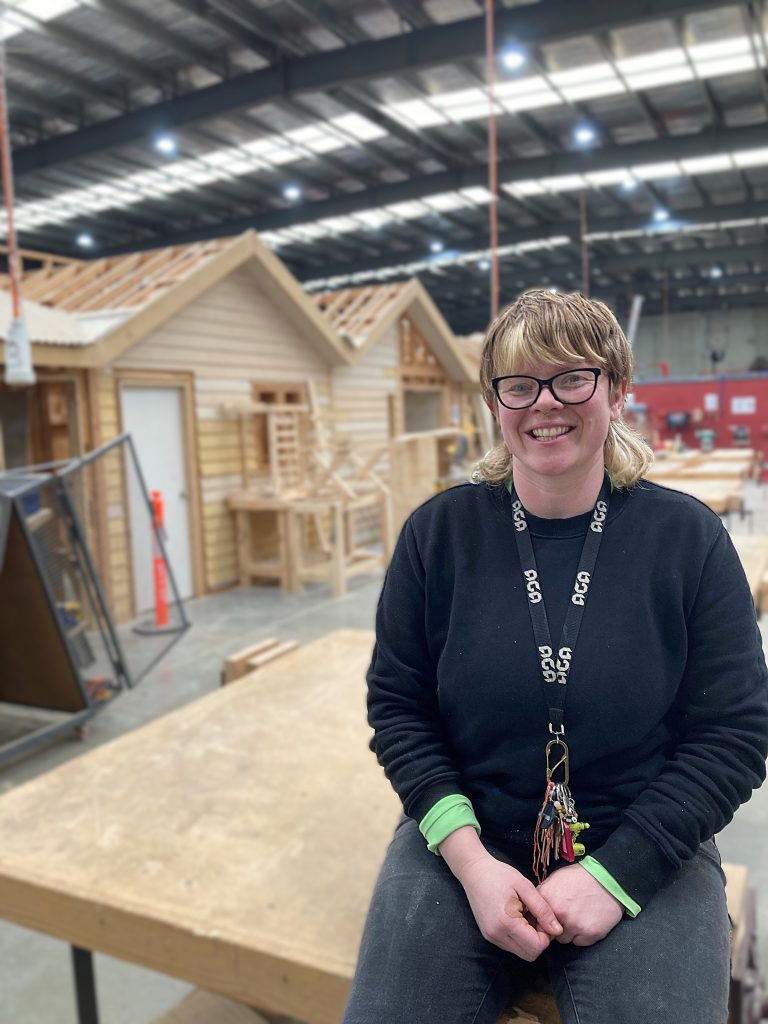
Lulu’s classroom – Helping take the mystery out of tools for young trainees
When Lulu was first approached about teaching at a trade school for AGA, she was somewhat hesitant.
“I was like, ‘Absolutely not. I went to trade school. No thank you’. But when they told me they were starting a Women in Trades program, I was interested to know more,’’ she said.
A qualified carpenter, Lulu was working in set construction when everything came to a halt during the pandemic. The opportunity to train women in trades prompted her to pursue a teaching qualification which led to her running the course at the AGA facility in Deer Park, where she has been working in various roles for the past three years.
When the Women in Trades program wrapped up, Lulu transitioned to teaching VET subjects for high school students. This new cohort required some adjustments to her teaching methods and a particular focus on classroom management.
“It’s very different. When I first started teaching VET, I hadn’t considered what it would be like to teach school-aged kids. They’re younger, they’re still figuring it out, so it just needs a different skill set. Now that I’ve developed those skills and understand what younger people need, I really love teaching this age group,” Lulu said.
VET programs generally run for two years and contribute a trade component to a student’s full school curriculum. Lulu says it’s ‘wild’ to see their development over that time – from students who are initially overwhelmed to being able to execute a full building plan.
“Seeing them make small decisions that I didn’t expect them to notice, like tapping a frame one millimetre to make sure it’s exactly in line, is amazing. They might not even realise they’re doing it, but I do, and I know that’s what it takes to be a carpenter. It’s really cool to watch that progress.”
While Lulu is thoroughly enjoying teaching high school students, she hopes more Women in Trades programs will be offered to help increase the number of women taking on apprenticeships. She believes the demand and the desire is there, and that having more women teaching trades could be the key to balancing up the numbers.
“It’s about giving people a safe space to take the mystery out of tools. Once you take that veil off and everything becomes less overwhelming, it doesn’t take long to go from ‘Whoa!’ to ‘Oh, I can do this!’. It’s very humbling to see people go from not knowing which end of a hammer to use, to visiting me later in their fourth year, nearly qualified. That’s really special to see.”